
Samba is one of the most popular forms of music in Brazil. It is widely viewed as Brazil’s national musical style.
In these work shops children practice and perform different Samba rhythms, first using their voices and then on the different Samba drums. Then the whole piece is put together to create a carnival atmosphere.
Samba workshops are not only great fun but full of learning opportunities
So …
What will you get out of it?
What will you be doing?
How long does a workshop last?
What will you get out of it?
Playing samba creates a lot of fun and enjoyment. To spend a few hours learning to play unfamiliar rhythms on instruments you may never even have seen before, and then to produce a creditable performance is enormously rewarding.
People find they can usually produce an acceptable sound on an instrument relatively quickly, without having to put in hours of practice. This makes workshops accessible to people of all ages and abilities.
These are some of the things you may experience:
playing alongside other beginners helps to dispel nervousness
confidence and fulfillment from playing together as a group
a sense of pride in the overall musical sound that is produced
encouragement and enhancement of teamwork
Samba workshops are a very positive activity for a wide variety of groups, including schools, businesses and community groups of all kinds. They are a way of developing personal skills, away from the pressures of normal everyday activities.
On an individual level, you can:
improve your co-ordination
gain a better sense of rhythm
develop your listening skills - you will find that you can gradually learn to listen to other patterns whilst sustaining your own part
Although this sounds like hard work, samba can be very relaxing, because in concentrating on listening and playing, there is no room left for all other thoughts and stresses which normally fill your head.
Why Start up a School Samba Band?
A school samba band is typically a group of 10 – 30 students playing Brazilian influenced percussion on Brazilian samba school instruments. Samba is the carnival rhythm of the samba schools of Rio de Janeiro, but school samba groups play many other (easier) styles of Brazilian percussion on their samba drums – reggae, funk, and hip hop are popular. The only limit is your imagination.
The samba band is a marching band, but is unlike European and American marching bands in some key respects.
Perhaps the single most important difference is that samba music is an aural tradition. In Rio de Janeiro no community samba band uses musical notation; everything is learnt by ear through persistent practice. If you apply this principal to music performance through a school samba band, you can reach those pupils who have previously proven to be resistant to formal musical education. The samba band reaches parts that other music education cannot reach.
Samba music is part of a carnival tradition which involves costumes, song and dance as well as percussion. In a school context, this gives an opportunity for many different school departments to work together on a single cross – cultural project. Costume making, singing, dance and percussion attract different pupils and there will be something in this broad curriculum mix for just about everyone.
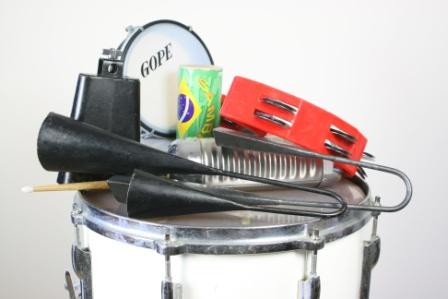
To set up the samba band you will need samba drums, but equipping a school samba group is cheap compared with setting up other types of musical ensembles. You will need surdos, caixas, repiniques, tamborins, chocalhos or ganzas, and you can add other instruments like agogos and timbas.
I know schools that have set up samba bands for their underachieving pupils, others that have set up samba bands for their gifted students, some who use the school samba group as an extracurricular activity, and many more who integrate the samba drums into their regular curriculum. Some use a samba band to involve parents more in school life. I know of samba bands in infants schools, junior schools, high schools and colleges.
Your samba band will find itself popular. There will be many school functions at which the band can perform, and it probably won’t be long before the band is in demand from a wider local community. With canny management the band can raise money to support itself, or to donate to charity. However you choose to integrate your samba band into your curriculum, it will substantially enrich the educational mix you offer to your students
Listen to a sample of music here.samba session

